Skip to content
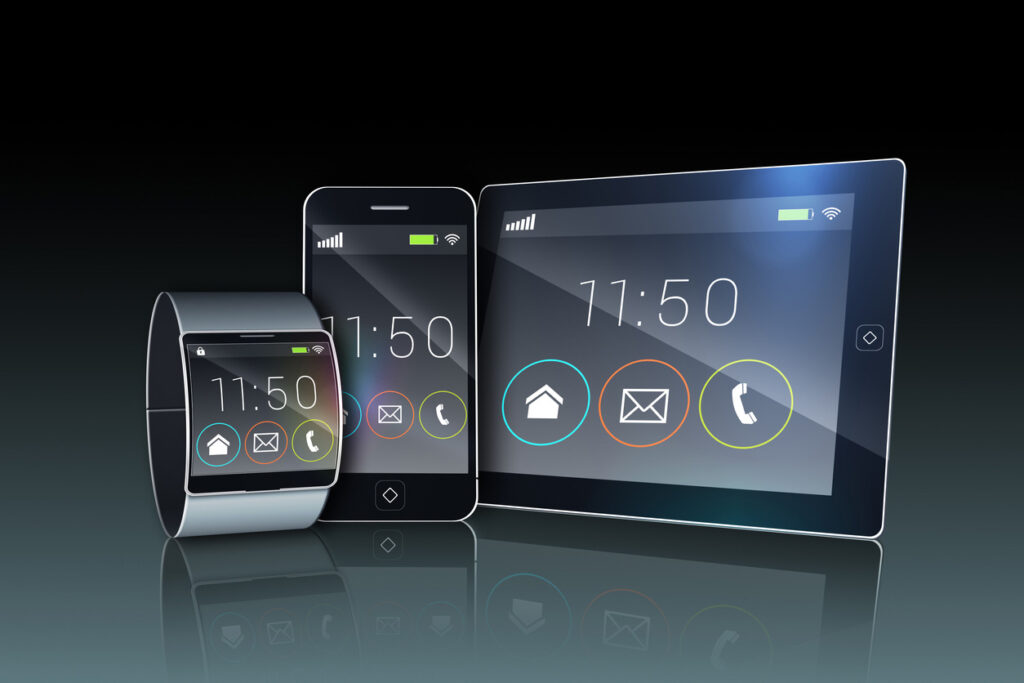
By the time a civil case reaches a courtroom, the most persuasive evidence rarely comes from a witness chair. It comes from a pocket, a wrist, a glove box, or a purse. Mobile device forensics has quietly become one of the most decisive disciplines in modern civil litigation, and trial lawyers who understand its reach hold a substantial strategic advantage.
From contested divorces and wrongful termination claims to personal injury, intellectual property theft, premises liability, and complex commercial disputes, the digital exhaust generated by everyday devices increasingly determines who wins and who walks away.
This article is written for trial lawyers and paralegals who want a clear, comparative understanding of the mobile devices that matter most in civil cases today. We will examine smartphones, tablets, digital watches, fitness trackers, GPS units, and smart speakers. We will compare and contrast what each device can yield through forensic recovery.
The goal is practical: by the end, you should know which devices to preserve, what evidence each is uniquely positioned to provide, and why mobile forensics belongs at the center of your discovery strategy.
Why Mobile Device Forensics Now Anchors Civil Discovery
Twenty years ago, eDiscovery meant email servers and shared network drives. Today, the average litigant carries more potential evidence in a single pocket than an entire 2005 corporate file room had.
A modern smartphone holds tens of thousands of messages, device locations collected every few minutes, hundreds of thousands of photographs with precise GPS metadata, multiple browser histories from Chrome, Edge, Firefox, Safari, and Opera, third-party app data, and biometric records. Multiply that by a tablet, a digital watch, a fitness tracker, a vehicle GPS, and a mobile smart speaker on the kitchen counter, and the digital footprint of an ordinary person becomes staggering.
For trial lawyers, this shift is not theoretical. Courts increasingly expect counsel to identify, preserve, and analyze mobile data sources during the duty to preserve, and judges have not hesitated to issue spoliation sanctions (adverse inferences) when devices were wiped, traded in, or factory reset after litigation became reasonably foreseeable.
A defensible discovery plan must account for every device the client and opposing party may have used, and a competent mobile device forensics expert is essential to extract, authenticate, and interpret that evidence in a way that survives a Daubert challenge and an aggressive cross-examination.
Mobile device forensics is also uniquely powerful because it captures behavior the witnesses themselves often forget or misremember. People lie, but their devices rarely do. A screenshot of a forgotten, deleted text message, a timestamped step count, a geofenced photograph, a Bluetooth pairing log, or a voice command recorded by a smart speaker can corroborate or quietly demolish an entire narrative. In civil disputes where credibility is everything, that kind of objective digital evidence is gold.
Smartphones: The Centerpiece of Mobile Device Forensics
If mobile device forensics has a flagship, it is the smartphone. iPhones and Android devices are the single richest source of evidence in nearly every civil case, and for good reason. They have text messages and iMessages, WhatsApp and Signal threads, call logs, contacts, photos and videos with embedded EXIF metadata, web history, app data from hundreds of installed applications, cellular and Wi-Fi connection records, and a continuously updated location history that often spans years. Modern forensic tools can recover not only the data a user can see, but also deleted artifacts, cached database fragments, and system logs the user never knew existed.
In a wrongful employment termination matter, a smartphone may show that the Plaintiff was working off the clock, sending company files to a personal account, or coordinating a competing venture from a parking lot during lunch. In a personal injury case, a mobile device may reveal that the driver was texting, scrolling social media, or streaming video at the moment of impact. In a contested custody dispute, message threads, photos, and location history can establish patterns of caregiving, communication, or behavior that no witness could credibly describe from memory alone.
Smartphones also preserve evidence of how data left the device. App usage logs, AirDrop transfers, cloud sync timestamps, and connected device records can show that proprietary documents were exfiltrated to a personal Dropbox or emailed to a competitor the day before resignation. For trade secret and restrictive covenant cases, this is often the difference between a hunch and a winnable claim. A qualified examiner can also tie a smartphone to specific Wi-Fi networks, Bluetooth peripherals, and vehicles, building a corroborated timeline that other evidence simply cannot match.
Smartphones are also the most legally sensitive device class. Encryption, biometric locks, cloud backups, Apple iPhone’s Stolen Device Protection, and rapidly changing operating systems mean that improper handling can render an entire device inaccessible or, worse, compromise its admissibility. Mobile forensics performed by a credentialed examiner using validated tools and a documented chain of custody is not optional; it is the price of admission.
Tablets: The Forgotten Goldmine
Tablets occupy an unusual place in civil discovery. They look like smartphones, function like laptops, and are routinely overlooked by both clients and opposing counsel during preservation. That oversight is a gift to the prepared litigator. iPads and Android tablets are frequently used as the primary device for email, document editing, web browsing, video calls, and entertainment, particularly in households where they are shared among family members or used by children and spouses interchangeably.
From a forensic standpoint, tablets often have the longer-form artifacts that smartphones lack. Drafts of letters, annotated PDFs, sketches and handwritten notes, browsing sessions that lasted hours rather than minutes, and long video call histories all tend to live on tablets. In family law cases, a shared iPad may capture iMessage conversations a spouse believed were limited to a phone, because Apple’s Continuity features quietly synchronized them across devices. In employment matters, a company-issued tablet may preserve a paper trail of confidential strategy documents accessed at unusual hours or from unusual locations.
Tablets also usually retain older data. Because storage is generous and users rarely clean them up, deleted messages and cached app data may persist on a tablet long after they were purged from the corresponding smartphone. A well-executed mobile device forensics examination treats the tablet, not as a redundant copy of the phone, but as an independent witness with its own memory and its own perspective on the same facts.
Digital Watches: A Witness Strapped to the Wrist
Smartwatches such as the Apple Watch, Samsung Galaxy Watch, and Google Pixel Watch have rapidly evolved from simple notification mirrors into independent computing platforms. They store and generate their own data, much of which never leaves the wrist. For civil litigation, the most valuable smartwatch artifacts include continuous heart rate readings, blood oxygen measurements, ECG snapshots, sleep stages, fall detection events, workout sessions with GPS tracks, and notifications acknowledged or dismissed at precise moments in time.
Consider a slip and fall case in which the Defendant insists the Plaintiff is exaggerating. A smartwatch may record a sudden heart rate spike, a fall detection alert, and a stationary period consistent with the Plaintiff’s account, all timestamped to the second. In a wrongful death matter, the Decedent’s watch may capture the final minutes of cardiac activity and movement with extraordinary precision. In an alleged workplace injury, the absence of any abnormal physiological event during the claimed incident can be just as probative as its presence.
Smartwatches also serve as silent corroborators of presence and communication. They log Bluetooth pairings with phones, cars, and headphones; they record when a wearer raised a wrist to view a notification; and they often retain message previews and dictated replies. Because users rarely think of their watch as a data source, the evidence stored there is often unaltered when the corresponding phone has been carefully sanitized. In the right case, that asymmetry is decisive.
Fitness Trackers: Quantified Self, Quantified Truth
Fitness trackers from manufacturers such as Fitbit, Garmin, Whoop, and Oura overlap with smartwatches but deserve their own discussion. Their primary purpose is continuous health and activity monitoring, and that single-minded focus means they often capture data with greater fidelity and longer retention than general-purpose wearables. Step counts, distance traveled, elevation gained, sleep periods, resting heart rate trends, and stress indicators are typically synchronized to a cloud account and preserved indefinitely, providing months or years of behavioral history.
Civil litigators have used fitness tracker data to powerful effect. In personal injury cases, a Fitbit history may show a Plaintiff who claims to be bedridden has actually been logging five-mile runs. In disability and insurance disputes, ring and band data can establish baseline activity levels before and after an incident. In domestic and family matters, sleep and activity patterns can corroborate or contradict claims about whereabouts, fatigue, or substance use. Because the data is collected passively and continuously, it is hard for a user to fabricate retroactively without leaving telltale gaps.
Forensically, fitness trackers present unique opportunities and challenges. Some devices store significant data on the wearable itself, while others act as little more than sensors that stream to a phone or cloud. A skilled examiner will pursue all three layers: the device, the paired mobile application, and the vendor’s cloud account, often through targeted preservation letters and subpoenas. The result is a multi-source record that is exceptionally hard to impeach.
GPS Units: Location Evidence Predates the Smartphone Era
Dedicated GPS units, including handheld outdoor navigators, marine chartplotters, aviation devices, fleet tracking units, and built-in vehicle navigation systems, remain quietly indispensable in civil disputes involving movement, transportation, and territory. While most consumers now navigate by smartphone, commercial vehicles, boats, recreational equipment, and many late-model automobiles still rely on dedicated GPS hardware that records detailed track logs, waypoints, route histories, and speed data.
GPS evidence is persuasive because it is mathematically grounded. Latitude, longitude, altitude, time, and velocity are recorded with precision that lay witnesses cannot approximate, and the data is typically stored in standardized formats that lend themselves to authenticated extraction. Mobile forensics specialists routinely image these units, parse proprietary log formats, and present the resulting tracks as overlays on courtroom maps rendered by Google Earth. Few demonstratives are more compelling to a jury than a red line on a satellite image that contradicts a defendant’s sworn timeline.
Smart Speakers: The Witness on the Counter
Smart speakers such as Amazon Echo, Google Nest, and Apple HomePod represent the newest and most controversial frontier of mobile evidence. They sit quietly in homes and offices, listening for wake words, and they routinely capture voice commands, brief audio snippets surrounding those commands, timestamps, device interactions, and the responses they generated. They also serve as hubs for connected home devices, meaning they may log when lights were turned on, when doors were unlocked, when thermostats changed, and when routines were triggered.
In civil litigation, this data can be remarkably revealing. A timeline of voice commands and routines can corroborate or contradict a party’s claim about being home, asleep, or alone at a particular hour. Connected device logs can show that a back door was unlocked at 2:14 a.m. or that a security camera was deliberately disabled minutes before an incident. In wrongful death and premises liability cases, the smart home becomes a silent witness to the rhythms of a household.
Smart speaker evidence also raises important preservation questions. Most of the meaningful data lives in Amazon’s, Google’s, or Apple’s cloud rather than on the device itself, which means timely preservation letters and properly scoped subpoenas are essential. A mobile device forensics examiner can identify which accounts and devices are in scope, articulate exactly what should be preserved, and later authenticate the production. Without that early intervention, the most valuable records may quietly age out of the ISP’s retention data window before the case is even filed.
Comparing the Devices: Strengths, Limits, and Strategic Use
Each device class contributes something different to the evidentiary picture, and a sophisticated litigation strategy treats them as complementary rather than redundant. Smartphones offer the broadest range of communications, content, and behavioral data, but they are also the most heavily protected and the most likely to have been sanitized by a careful adversary. Tablets often preserve longer-form artifacts and synchronized copies of data the user assumed lived only on a phone, and they are often overlooked during preservation. Smartwatches and fitness trackers provide physiological and movement data with a level of granularity no human witness can match, and their continuous, passive collection makes them resistant to fabrication.
GPS units deliver the most precise and authoritative location and motion evidence available, particularly in commercial, maritime, and vehicular contexts where dedicated hardware remains the standard. Smart speakers and the broader smart home ecosystem add a layer of ambient evidence about presence, routine, and household activity that simply did not exist a decade ago. Together, these devices create a mesh of corroboration. When two or three independent sources agree on a timeline, the resulting narrative is extraordinarily hard to attack. When they disagree, the conflict itself often points to the truth.
There are practical contrasts too. Smartphones and tablets typically require advanced extraction techniques, and access may depend on passcodes, biometrics, or cloud credentials. Wearables vary a lot in how much data they store locally versus in the cloud, which affects both preservation strategy and cost. GPS units are often the easiest devices to image cleanly, but interpreting proprietary log formats requires specialized knowledge. Smart speakers depend almost entirely on ISP cooperation, which is why early, well-drafted preservation demands are critical. A trial team that understands these differences can set aside discovery resources intelligently rather than chasing every device with equal effort.
Preservation, Chain of Custody, and Admissibility
None of this evidence matters if it cannot be admitted. The same evidentiary principles govern mobile device forensics as any other form of digital proof: the data must be authentic, reliable, and produced through a defensible process. That means engaging a qualified examiner early, issuing precise preservation letters, avoiding any attempt by the client or legal staff to inspect devices informally, and documenting every step from collection through analysis to reporting. Courts are increasingly attentive to the method behind mobile evidence, and an examiner who can articulate validated tools, repeatable procedures, and a clean chain of custody will hold up where an enthusiastic amateur will not.
Trial lawyers should also be alert to the spoliation risks unique to mobile devices. A factory reset, an operating system upgrade, a trade-in for cash or a discount, or even a failure to isolate or protect the device can permanently overwrite or abandon the very artifacts a case depends on.
The duty to preserve attaches when litigation is reasonably foreseeable, and that duty extends beyond the smartphone in the client’s hand to the tablet on the nightstand, the watch on the wrist, the tracker in the gym bag, the GPS in the truck, and the smart speaker in the kitchen. A short, specific litigation hold that names device classes and cloud accounts is far more effective than a generic instruction to preserve electronic records.
How Trial Lawyers and Paralegals Can Put Mobile Device Forensics Into Practice
The practical takeaway for litigation teams is straightforward. Build a mobile device inventory into every intake interview. Ask clients not only about phones and computers but about every wearable, vehicle, and smart home device in their lives and in the lives of opposing parties. Treat that inventory as a living document that evolves as discovery progresses. When you draft preservation letters and discovery requests, name the device categories explicitly and identify the cloud services associated with each. Generic references to electronic data invite generic responses; specificity invites compliance.
Engage a mobile device forensics expert before, not after, you need one. A brief consultation at the outset of a case can shape preservation strategy, identify devices the client may have forgotten, and prevent inadvertent spoliation. When the case heats up, that same examiner can perform forensically sound acquisitions, recover deleted artifacts, correlate evidence across multiple devices, and translate technical findings into clear, jury-ready exhibits. The cost of doing this correctly is almost always dwarfed by the value of the mobile evidence recovered, and far smaller than the cost of explaining to a judge why a critical device was not preserved.
Take the time to understand what each device class can and cannot tell you. A smartphone can show what was said and when. A smartwatch can show what the body was doing while it was being said. A fitness tracker can show what happened in the days, weeks, and months around the event. A GPS unit can show where it happened and how fast. A smart speaker can establish whether anyone else was in the room. No single source tells the whole story, but woven together they produce a record that is far more honest than any human witness alone.
The Bottom Line for Civil Litigators
Mobile device forensics is no longer a specialty discipline reserved for criminal cases or high-stakes corporate investigations. It is a core competency of modern civil litigation, and the firms that embrace it are consistently better positioned to settle on favorable terms, win on summary judgment, and prevail at trial.
Smartphones, tablets, digital watches, fitness trackers, GPS units, and smart speakers each contribute a distinct and powerful form of evidence, and together they form an interlocking record of human behavior that is unprecedented in legal history. For trial lawyers and paralegals, the message is simple. The truth in a civil dispute increasingly lives inside the devices the parties carry, wear, drive, and speak to. Knowing which devices to preserve, how to extract their data defensibly, and how to compare and contrast what each reveals is now an essential part of competent representation.
Mobile forensics is the discipline that turns that scattered digital exhaust into admissible, persuasive, case-defining evidence, and the lawyers who treat it as central to their practice will keep winning the cases that matter most.